

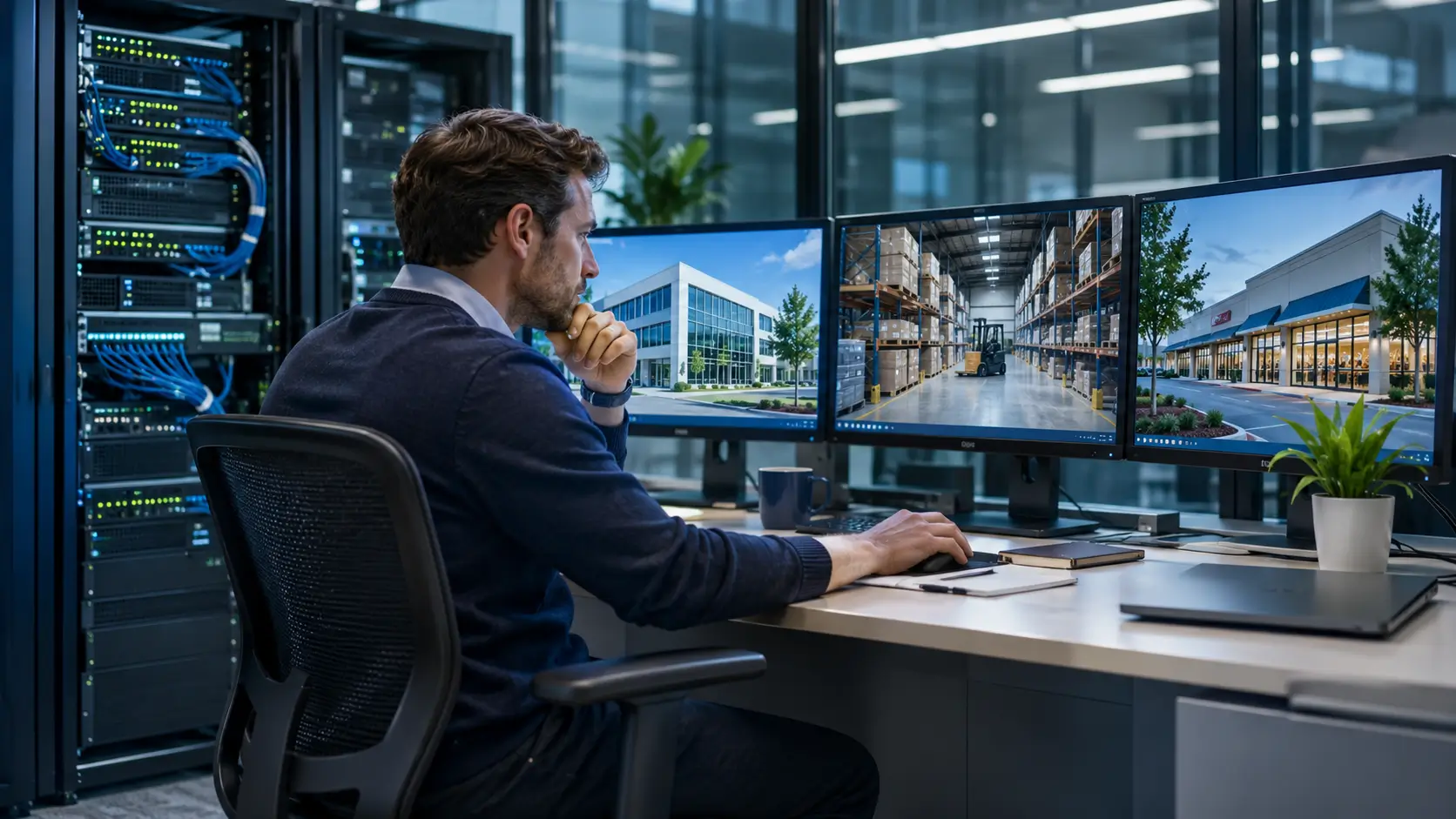
5 Key Takeaways About Technology Infrastructure in Construction
- Planning technology from the earliest project stages facilitates installation and helps avoid later modifications.
- Structured cabling, fiber optics, and WiFi networks should meet both current and future project requirements.
- Security cameras and access control systems require an appropriate network infrastructure.
- Coordination between designers, builders, and installers helps reduce conflicts during project execution.
- Technical documentation facilitates maintenance and future building expansions.
Technology infrastructure is an important component in the development of commercial buildings, offices, residential complexes, and industrial facilities.
At ITNETWIDE, we recognize the value of planning these systems from the earliest stages of construction to establish how the networks, connectivity, security systems, and equipment involved in building operations will function.
When these elements are addressed from the beginning of a project, installations can be better coordinated and available spaces can be used efficiently. This helps determine cable routes, equipment locations, and the conditions needed to maintain an organized infrastructure.
Installing technology when construction is already underway can lead to modifications to walls, ceilings, and conduits. It may also make certain access points more difficult to reach or increase the work required to incorporate new devices.
Every project has specific requirements. An office building may need high-capacity connections, WiFi coverage for numerous users, and communications rooms.
A residential complex may require cameras, access control, and connectivity in common areas, while an industrial facility may rely on networks designed for specific equipment and processes.
Planning should address both immediate requirements and the building’s expected growth. The number of users, connected devices, space layout, and systems to be installed all influence technical decisions.
The infrastructure must also be coordinated with electrical, architectural, and telecommunications designs. Joint planning facilitates installation and makes it possible to deliver a building with documented systems that are ready for operation.
Keep reading this article to learn how to plan technology infrastructure and what to address at each stage of the project.
What Does Technology Infrastructure Include in a Construction Project?
Technology infrastructure brings together the physical components and installations that connect devices, transmit data, and operate different systems within a building.
Its scope depends on the type of property, but it may include structured cabling, fiber optics, wireless networks, racks, communications cabinets, networking equipment, IP cameras, and access control systems.
These components should be designed as part of a coordinated infrastructure.
For example, security cameras need connection points and network capacity; WiFi access points require suitable locations and connections to communications equipment; and racks need sufficient space to accommodate the planned devices.
Defining these elements during the design stage helps coordinate materials, technical spaces, and installation activities.
Elements to Plan from the Start
Structured Cabling
Structured cabling forms the foundation of many building communication systems. It connects computers, IP phones, printers, wireless access points, and other devices.
Planning includes the location of connection points, cable routes, conduits, and termination spaces. It also takes into account factors such as distances, environmental conditions, and the selection of appropriate materials.
A well-designed layout makes connections easier to identify, simplifies maintenance, and accommodates new requirements without relying on improvised installations.
Fiber Optics and Communication Links
Fiber optics connects communications rooms, different floors, or buildings, depending on the distances involved and the required capacity.
Its implementation should align with the overall network design, taking into account connection points, available routes, and future expansion needs. In projects with multiple areas or buildings, planning these links facilitates connectivity distribution and future expansions.
WiFi Networks
Wireless connectivity planning should account for the layout of spaces, construction materials, and the estimated number of users.
Access point locations influence coverage and connection quality. It is important to identify the areas that will need service, such as offices, meeting rooms, reception areas, and common spaces.
In large projects, a coverage survey helps determine the number and location of devices, reduce areas with weak signals, and size the infrastructure according to the building’s needs.
Racks and Communications Rooms
Racks and cabinets house switches, patch panels, and other network components. Their locations should facilitate cable distribution and provide access for technical work.
Ventilation, electrical power, available space, and security are essential considerations. An organized communications room makes inspections easier and helps identify equipment and connections quickly.
Security Cameras and Access Control
Security systems should be integrated into the building’s technology planning. IP cameras and some access control devices rely on the network to transmit information and communicate with other systems.
Planning includes installation points, connection routes, network capacity, and spaces for associated equipment. It also incorporates video storage and electrical power requirements.
Coordinating security design with communications infrastructure facilitates installation and reduces adjustments during construction.
What Are the Steps to Planning Technology Infrastructure?
Identify the Building’s Requirements
Planning begins by identifying the building’s intended use and the technology services that will be part of its operation. Corporate offices, retail spaces, warehouses, and residential complexes have specific connectivity and security requirements.
Determine how many areas will need connections, which devices will be installed, and which systems will need to communicate with one another. Projecting the building’s growth helps size the infrastructure and maintain its capacity over the long term.
Coordinate Technical Designs
Technology infrastructure must be coordinated with architectural, electrical, and other installation plans. This review helps identify cable routes, technical spaces, and potential conflicts with other building components.
Early coordination facilitates activity scheduling and helps establish the responsibilities of each work team.
Determine Materials and Equipment Requirements
Once the requirements have been identified, the necessary materials and devices can be selected. This stage includes choosing cabling, connection points, networking equipment, racks, and security components suited to the project.
Decisions should be based on technical requirements, installation conditions, and expansion possibilities. Selecting the right components from the beginning facilitates future maintenance.
Plan Installation and Testing
Installation is coordinated with construction progress and the activities of other contractors. The schedule establishes when conduits will be installed, cables will be laid, and equipment will be placed and configured.
Before the infrastructure is handed over, the corresponding tests are performed. Depending on the system, these include cabling inspections, connectivity tests, and checks to verify that devices are operating correctly.
Document the Installed Infrastructure
At the end of the project, the handover includes updated floor plans, connection point identification, network diagrams, and equipment inventories. This documentation records the final infrastructure configuration and facilitates future technical work.
Why Work with Technology Infrastructure Specialists?
Technology planning combines design decisions, material selection, installation, and testing. Working with specialists helps translate project requirements into an organized infrastructure that is compatible with the building’s conditions.
Their involvement from the earliest stages makes it possible to review cable routes, equipment spaces, network point distribution, and connectivity and security requirements.
It also facilitates coordination with other technical teams. When responsibilities, plans, and procedures are established, installation is easier to organize and components can be checked against the specified requirements.
What Does ITNETWIDE Bring to the Technology Infrastructure of Each Project?
At ITNETWIDE, we work on the design and implementation of technology infrastructure solutions for businesses and projects that require connectivity, structured cabling, networking equipment installation, and security systems.
Our work integrates these components according to the building’s characteristics and each operation’s requirements. We coordinate installations, organize connection points, and plan equipment implementation to meet the project’s needs.
This approach supports the development of infrastructure designed for daily operations, maintenance, and future space expansions.
With ITNETWIDE, every project receives technology solutions aligned with its characteristics and objectives.
Read other articles on our blog to find more advice about networking, connectivity, and technology infrastructure to help optimize your company’s resources. Keep learning with our content.
Frequently Asked Questions
When Should a Building’s Technology Infrastructure Be Planned?
Ideally, it should be defined during the earliest design stages, before decisions affecting conduits, technical spaces, and cable routes are finalized. This allows it to be coordinated with other building installations.
What Technology Systems Does a Commercial Building Need?
It depends on the building’s purpose and size. It may require structured cabling, fiber optics, WiFi networks, racks, security cameras, access control, and communication equipment.
What Is Structured Cabling Used for in a Construction Project?
It organizes a building’s data connections through a planned infrastructure. It facilitates device connectivity, maintenance, and the addition of new connection points according to the property’s needs.
Why Is It Important to Document Technology Installations?
Documentation records connection layouts, installed equipment, and infrastructure specifications. This information facilitates troubleshooting, repairs, and future expansions.
