

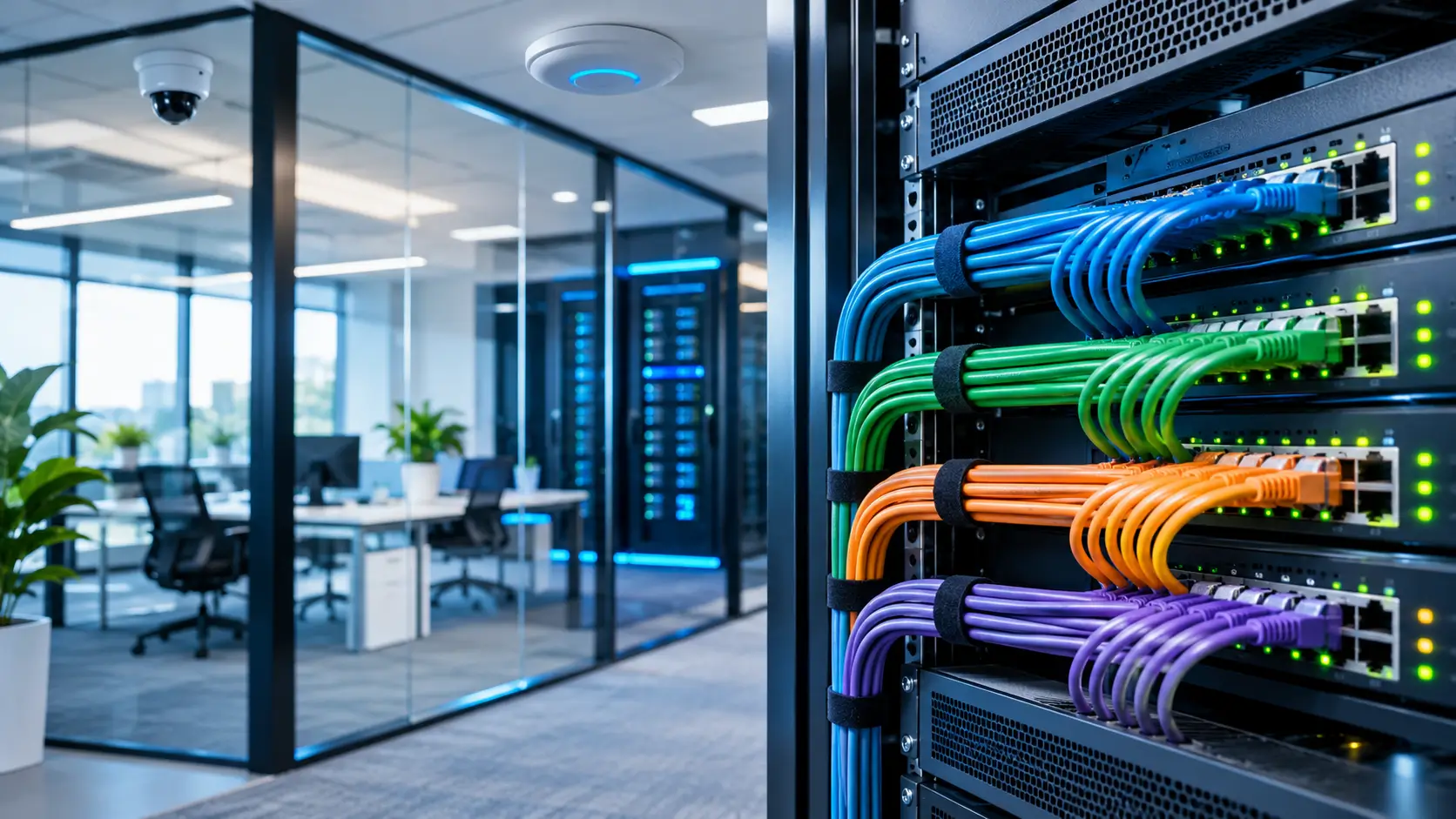
5 Key Takeaways About Network Segmentation
- Network segmentation divides an infrastructure into zones with defined functions and permissions.
- Separating employees, guests, cameras, and servers helps restrict access between devices.
- Proper segmentation can reduce the scope of certain security incidents.
- Planning communication rules simplifies network administration and troubleshooting.
- Network design should account for operational needs, equipment capacity, and business growth.
An enterprise network connects employees, servers, printers, security cameras, and other devices required for daily operations.
As an organization adopts new tools and increases the number of connected devices, managing all these resources within a single network can make access control and troubleshooting more challenging.
When devices share the same network environment without adequate separation, a compromised or misconfigured device can pose a risk to other resources. In addition, traffic from different services may compete for available capacity and complicate fault diagnosis.
Enterprise network segmentation organizes infrastructure into separate zones based on functions, users, or security requirements. This arrangement helps define which devices can communicate with one another and under what conditions, according to the organization’s needs.
At ITNETWIDE , we provide networking, connectivity, and technology infrastructure solutions for businesses that need organized and reliable systems.
A well-planned segmentation strategy makes it possible to integrate workstations, servers, and security devices with controls suited to each function.
In this article, we explain what network segmentation is, its main benefits, the factors to consider during implementation, and how it can improve the management and security of enterprise infrastructure.
What Is Network Segmentation and How Does It Work?
Network segmentation involves dividing a computer network into smaller segments, with rules that control communication between them.
Instead of allowing all devices to communicate freely, a company can establish zones according to their functions and restrict connections to those that are actually needed.
A common way to implement this structure is through virtual local area networks, known as VLANs. These allow groups of devices to be separated within a compatible physical infrastructure.
For example, devices in the finance department can belong to a different VLAN from the one used by visitors or security cameras. VLANs make it possible to segment the network and organize traffic according to the needs of each environment.
To strengthen communication control between segments, rules can be configured on routers, firewalls, or other security devices based on each system’s communication requirements.
Segmentation can also be implemented through more advanced mechanisms, such as access policies and controls based on device identity. The appropriate approach depends on the company’s size, network complexity, and required level of protection.
Why Should a Company Segment Its Network?
Separating devices according to their functions helps organizations manage infrastructure more effectively and establish more precise controls.
Here are some of the main benefits.
Better Access Control and Security
Segmentation makes it possible to restrict communication between devices that do not need to exchange information. For example, visitors can access the internet without connecting directly to the company’s internal servers.
This separation reduces unnecessary connections and can limit the scope of a security incident. To achieve this, it is important to establish clear rules, allow only necessary traffic, and review configurations regularly.
Segmentation complements other security measures, such as updates, authentication, and network monitoring.
Better Device Organization
Enterprise networks connect computers, IP phones, printers, cameras, servers, and guest devices. Grouping them according to their functions makes identification and management easier.
An organized structure makes it possible to document the devices in each segment, the services they use, and the communication rules they require. This simplifies the addition of new devices, troubleshooting, and the implementation of specific policies for each group.
Easier Network Administration
Dividing infrastructure into well-documented segments makes it easier to identify the source of problems. If an issue affects a specific area, the IT team can first review the related devices and configurations.
This separation facilitates controlled change management.
For example, adjustments to the guest network can be made independently of the configuration of financial department equipment, depending on the network design and the dependencies between both environments.
Better Traffic Management
Segmentation helps organize traffic and apply quality of service (QoS) policies when supported by the equipment. This is useful in networks that combine business applications, video conferencing, IP cameras, and other services with different bandwidth requirements.
Network segmentation helps organize traffic and optimize resource management. Its results depend on the design, configuration, equipment capacity, and internet connection.
Which Devices and Users Should Be Separated?
Each network’s structure should reflect the company’s actual functions.
The following groups may benefit from separate network segments:
- Employees and departments: Teams with different access requirements can have specific rules for using applications and internal resources.
- Visitors: A separate network provides guest connectivity without granting direct access to business systems.
- Servers and critical applications: These resources can be protected through rules that restrict connections to authorized users and services.
- Cameras and access control systems: Separating these devices facilitates the implementation of specific controls and traffic management.
- IP telephony and video conferencing: These services may require configurations that help prioritize traffic sensitive to delays.
- IoT devices: Sensors, automation equipment, and other connected devices can be placed in segments suited to their functions and risk profiles.
Segmentation should address the organization’s operational needs.
Before creating segments, it is important to identify which systems need to communicate, which applications they use, and how to ensure the connections required for each process to operate effectively.
How to Implement Enterprise Network Segmentation?
Effective implementation begins with an understanding of the existing infrastructure and continues with planning that can be tested and maintained.
- Inventory devices and services: Record computers, servers, cameras, printers, access points, and other equipment. Identify their functions, locations, and communication requirements.
- Define network zones: Group resources according to their functions, risk levels, and operational requirements. Avoid creating unnecessary segments that complicate administration.
- Review available equipment: Verify that switches, routers, and firewalls support the required features. The infrastructure must accommodate the VLANs, communication rules, and controls specified in the design.
- Establish communication rules: Define which connections are permitted between segments and which should be blocked. Apply the principle of least privilege, whereby each resource receives only the access it needs.
- Test before rolling out changes: Whenever possible, implement the configuration in a controlled area. Check access to applications, critical services, and related devices before applying the design across the entire company.
- Document and monitor: Record VLANs, network addresses, rules, and responsible personnel. After implementation, review logs and adjust the configuration as business needs change.
A well-designed segmentation strategy should be easy for the responsible team to understand and supported by sufficient documentation to facilitate maintenance and future expansions.
What Mistakes Should Be Avoided When Segmenting a Network?
An inadequate configuration can cause access problems or make technical support more difficult.
To minimize these risks, it is important to avoid common mistakes:
- Creating segments without a clear purpose: Too many divisions can increase complexity without delivering significant improvements.
- Allowing excessive communication: Overly broad rules reduce the effectiveness of segmentation and may expose resources that should have restricted access.
- Blocking essential services: Policies must account for dependencies between applications, servers, and devices.
- Neglecting documentation: A network without up-to-date records is more difficult to maintain and expand.
- Failing to review configurations: Changes in personnel, applications, and equipment can alter access requirements.
Network segmentation should be reviewed regularly to confirm that the rules remain appropriate and that devices are assigned to the correct segments.
How Can ITNETWIDE Help with Network Infrastructure?
A network segmentation strategy requires an understanding of network architecture, available equipment, and the company’s communication needs. Planning should integrate security, connectivity, and ease of administration so that changes support the organization’s objectives.
At ITNETWIDE, we provide technology infrastructure solutions that include enterprise networks, Wi-Fi, structured cabling, fiber optics, equipment installation, and technical support.
These services address different components of an installation and help organizations plan improvements according to their infrastructure requirements.
If your company needs to organize its networks, assess existing infrastructure, or prepare connectivity for new devices, visit ITNETWIDE to learn about our technology solutions.
Read more articles on our blog for additional tips on networking, connectivity, and IT infrastructure to optimize your company’s resources and continue learning from our content.
Frequently Asked Questions
Does Network Segmentation Improve Business Security?
Yes. It allows organizations to restrict communication between devices and reduce unnecessary access. Its effectiveness depends on the configured rules and how segmentation integrates with other security measures.
What Is a VLAN?
A VLAN is a virtual local area network that allows devices to be grouped logically within a compatible infrastructure. It is used to organize traffic and separate groups of devices without requiring a separate physical network for each group.
Is It Necessary to Replace All Equipment to Segment a Network?
Not always. Some existing switches, routers, and firewalls may support the required features. Their capabilities, current configuration, and design requirements should be reviewed first to determine whether any components need upgrading.
How Often Should Network Segmentation Be Reviewed?
It is important to update segmentation when new systems are introduced, user roles evolve, or devices are added. Regular reviews of the rules and documentation help keep controls aligned with the company’s needs.
